The 8 trends at a glance
- All-in-one plugins with macros
- AI as an assistant, not a pilot
- Augmented vocals
- Objective listening and blind tests
- The end of the loudness war
- The return of affordable perpetual licenses
- Session organization as a time-saver
- The idea on mobile, the finish on desktop
1. All-in-one plugins with macros
After years of stacking plugins, producers want tools that do more with fewer controls. The 2027 trend: a versatile engine driven by a few musical macros. Instead of ten technical parameters, a single knob that changes the character.
Reverbia is a good example: 25 reverbs, a CHARACTER knob that goes from natural to unreal, and everything you usually add around a reverb already built in (EQ, drive, ducking, shimmer, LFO). Same logic for Anodyn, which brings several compressor colors together behind its own CHARACTER knob.
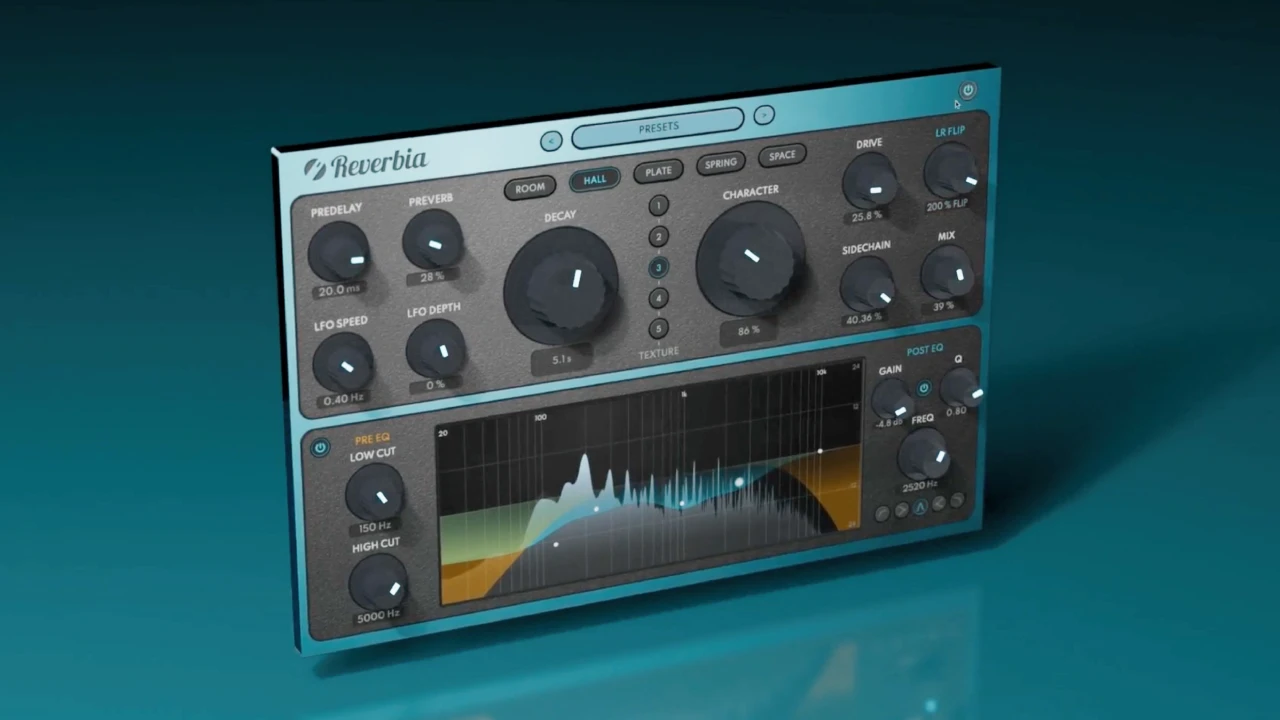
Reverbia
The all-in-one reverb: 25 reverbs, from realistic rooms to otherworldly spaces.
$79 $158 -50%
VST3 · AU · AAX · Windows & macOS
See Reverbia2. AI as an assistant, not a pilot
In 2026 AI became commonplace: mastering assistants (Ozone 12 suggests a starting chain after analyzing the mix), vocal suites with automatic settings, stem separation. In 2027 the question is no longer "do you need AI?" but "how do you stay in control?". The best tools propose; your ears decide.
3. Augmented vocals
Real-time generated harmonies, synthetic voices, ever more transparent pitch correction: vocal processing is AI's most active field. Vocals remain highly produced but more natural, with reverbs that step aside while the singer sings. Our guide to the best vocal plugins for 2027 details the typical chain.
4. Objective listening and blind tests
With more and more tools and automatic suggestions, one question becomes central: does it really sound better? The main bias is well known: louder seems better. Hence the rise of level-matched comparison tools such as Diffonic, which matches the loudness of two signals and offers a 6-step blind test. See the best A/B tools for 2027.
5. The end of the loudness war
Streaming normalization (-14 LUFS on Spotify and YouTube, -16 LUFS on Apple Music) has changed priorities: a master that is too loud just gets turned down. In 2027 you measure, check and deliver compliant files rather than crushing the dynamics. Fast analysis tools like Lufsonic, which checks and batch-normalizes files, are becoming delivery reflexes.
6. The return of affordable perpetual licenses
Subscriptions have multiplied, but many musicians prefer to own their tools. The market's answer: perpetual-license plugins at accessible prices, often 50% off all year. Our selection of the best plugins under $50 gives an overview.
7. Session organization as a time-saver
Sessions keep growing in tracks, takes and stems. Renaming, sorting and finding files is becoming a real productivity issue. Utilities like Renamely, which batch-renames audio files with instrument suggestions and preview, are settling in next to the DAW.
8. The idea on mobile, the finish on desktop
The phone has become the musician's notebook: you capture a chord progression, a rhythm or a melody, then finish in the DAW. Apps that export cleanly to the computer, like the free Toool app (iOS and Android) with its assisted chord generation, benefit from this workflow.
Key takeaways for 2027
Fewer but smarter plugins, AI that assists without deciding, choices checked by ear and at equal loudness, and deliveries that are clean rather than louder. The tools that will win in 2027 are the ones that save time without taking away control.
Frequently asked questions
What is the big plugin trend of 2027?
Consolidation: fewer, more versatile plugins with musical macros (a CHARACTER knob instead of ten parameters). Reverbia and Anodyn illustrate this approach well.
Will AI replace audio engineers?
No. It suggests starting points and automates tasks (stem separation, mastering assistants), but artistic choices remain human. Objective listening tools are becoming more important precisely to validate those suggestions.
Should you still aim for a very loud master in 2027?
No. Platforms normalize loudness; a master that is too loud simply gets turned down. The priority is density and clarity at playback level.
Subscription or perpetual license in 2027?
Both coexist, but demand for reasonably priced perpetual licenses remains strong among home-studio producers, who keep the same tools for years.