The short answer
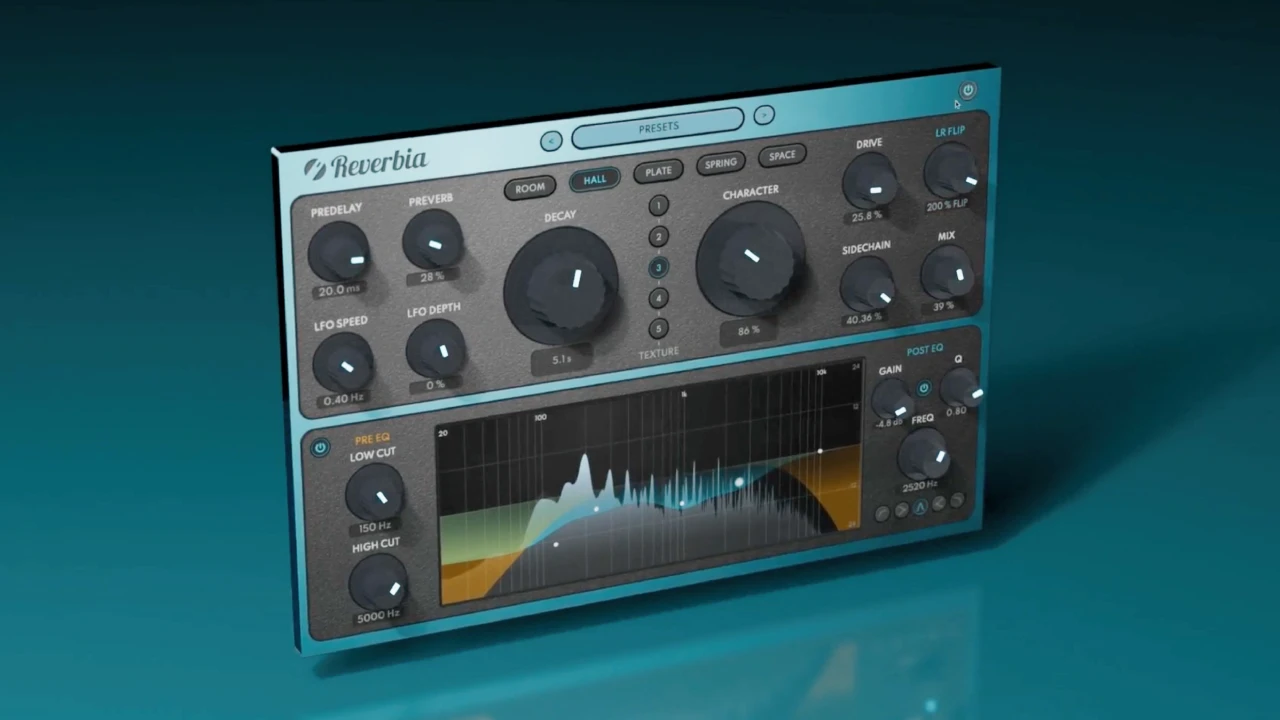
- Choose Reverbia if you want a complete reverb that handles EQ, ducking, drive, shimmer and modulation in one window, from realistic spaces to unreal ones.
- Choose VintageVerb if you want a very affordable, lightweight reverb with a strong vintage digital color and you don't mind adding other plugins around it.
Two different philosophies
Valhalla VintageVerb is one of the most loved reverbs of the past decade: algorithms inspired by classic digital units of the 1970s and 1980s, "1970s", "1980s" and "Now" color modes, and a very low price. Reverbia starts from another idea: putting into the reverb everything you usually add around it, so a reverb sounds right in the mix without a chain of extra plugins.
| Reverbia | Valhalla VintageVerb | |
|---|---|---|
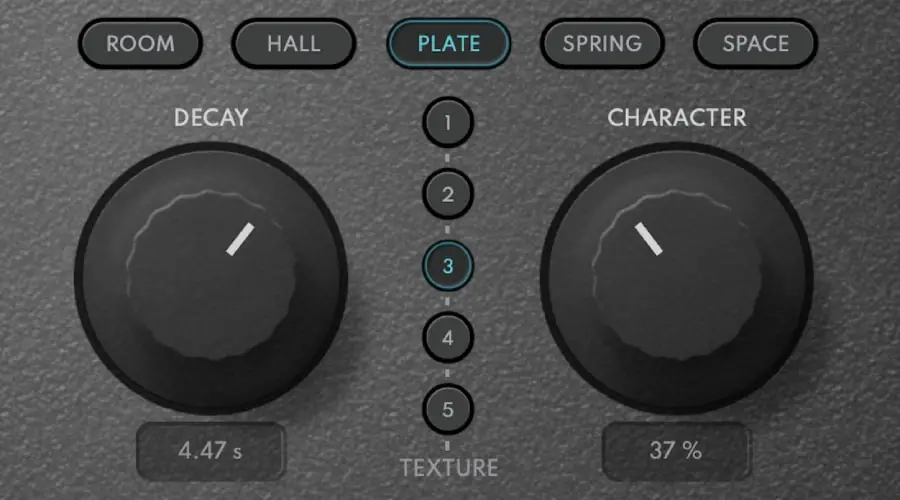
| Reverbs | 25 (ROOM, HALL, PLATE, SPRING, SPACE × 5) | Many vintage-inspired modes |
| Character | CHARACTER knob, realistic to unreal | 1970s / 1980s / Now color modes |
| EQ | Pre-EQ and post-EQ | Filters and damping controls |
| Ducking | Built-in sidechain ducking | No (needs an extra compressor) |
| Saturation | DRIVE with several types | No |
| Shimmer | Yes (hidden, double-click PREVERB) | No (separate Valhalla Shimmer) |
| Movement | LFO, tremolo, tempo-synced predelay and decay | Modulation |
| Stereo | WIDTH and channel swap | Standard stereo |
| Price | $79 (instead of $158) | Lower |
Where VintageVerb wins
- Price: it's one of the best value reverbs ever made.
- A recognizable vintage color: its modes evoke famous hardware reverbs immediately.
- Lightness: very easy on the CPU, you can open many instances.

Image: Valhalla DSP
Where Reverbia wins
- Everything around the reverb is built in: pre-EQ to keep lows and sibilance out of the tail, post-EQ to shape it, sidechain ducking to keep words and riffs clear, drive to add grit.
- A wider range: CHARACTER takes each of the 25 reverbs from realistic rooms to wide, dense and unreal spaces.
- Creative tools: hidden shimmer, LFO, tremolo, tempo-synced predelay and decay, WIDTH with channel swap.
- Fewer plugins per send: a lighter, faster session to set up.
Reverbia
The all-in-one reverb: 25 reverbs, from realistic rooms to otherworldly spaces.
$79 $158 -50%
VST3 · AU · AAX · Windows & macOS
See ReverbiaWhich one for you?
| Profile | Our pick | Why |
|---|---|---|
| Tight budget, vintage taste | VintageVerb | Excellent sound for very little money |
| Vocals and dense mixes | Reverbia | Ducking and pre-EQ keep words clear |
| Electronic and ambient | Reverbia | Shimmer, LFO, drive, unreal spaces |
| Fast workflow, fewer plugins | Reverbia | EQ, ducking and saturation in one window |
| 80s pop and synthwave color | VintageVerb | Its 1980s mode nails the era |
The best test is still your own tracks: compare both on the same send, at matched loudness, with Diffonic.
2027 verdict
VintageVerb remains a fantastic value with a strong vintage personality. Reverbia is the better choice if you want one reverb that does more: realistic to unreal spaces, EQ, ducking, drive, shimmer and modulation, without building a chain around it. See also Reverbia vs FabFilter Pro-R 2 and our best reverbs of 2027.
Frequently asked questions
Is Reverbia better than Valhalla VintageVerb?
They don't aim at exactly the same thing. VintageVerb is an excellent, inexpensive algorithmic reverb with a strong 70s/80s character. Reverbia goes further in one window: CHARACTER from realistic to unreal, drive, EQ before and after, sidechain ducking, shimmer, LFO and tremolo. If you want fewer plugins around your reverb, Reverbia is the better choice.
Which is better for vocals?
Both sound great on vocals. Reverbia's built-in ducking and pre-EQ make it faster to keep words clear without adding a compressor and an EQ around the reverb; VintageVerb's plates are a classic that needs a little more setup for the same result.
Which one is cheaper?
VintageVerb is cheaper. Reverbia costs more but replaces several plugins you would otherwise chain around a reverb (EQ, ducking compressor, saturation, shimmer).