The short answer
- Choose Reverbia for music production: 25 characterful reverbs, from realistic to unreal, with drive, shimmer, modulation, EQ and ducking, at a lower price.
- Choose Pro-R 2 for surgical control of the decay across the spectrum, immersive mixing up to 9.1.6 and matching real spaces from impulse responses.
Two strong reverbs, two priorities
FabFilter Pro-R 2 is the reference for engineers who want precision: musical controls (Space, Decay Rate, Brightness, Character, Distance), a Decay Rate EQ that shapes decay time across the whole spectrum, Vintage and Plate algorithms, a Thickness control, built-in ducking and immersive support. Reverbia puts the priority on character and speed: pick one of 25 reverbs, set how real or unreal it should be, shape it with two EQs, and add drive, shimmer or movement when the music calls for it.
| Reverbia | FabFilter Pro-R 2 | |
|---|---|---|
| Reverbs | 25: ROOM, HALL, PLATE, SPRING, SPACE × 5 variations | Room models + Vintage and Plate algorithms |
| Character | CHARACTER, realistic to wide, dense and unreal | Character, clean to lively to chorus-like |
| EQ | Pre-EQ and post-EQ | Decay Rate EQ and Post EQ |
| Ducking | Yes (sidechain, with compressor mode) | Yes |
| Saturation | DRIVE with several types | Thickness (saturation and compression) |
| Shimmer | Yes (hidden) | No |
| Spring reverb | Yes (SPRING types) | No dedicated spring |
| Modulation | LFO and tremolo | Via Character |
| Immersive | Stereo | Up to 9.1.6 |
| IR import | No | Yes (converted to settings) |
| Price | $79 (instead of $158) | Higher |
Where Pro-R 2 wins
- Decay control across the spectrum: the Decay Rate EQ is unique for shaping how each frequency range decays.
- Immersive and post-production: layouts up to 9.1.6 with surround cross-feeding.
- Matching real spaces: import an impulse response and Pro-R 2 converts it into its own settings.
- Transparency: designed to sit in a mix without unwanted coloration.
Where Reverbia wins
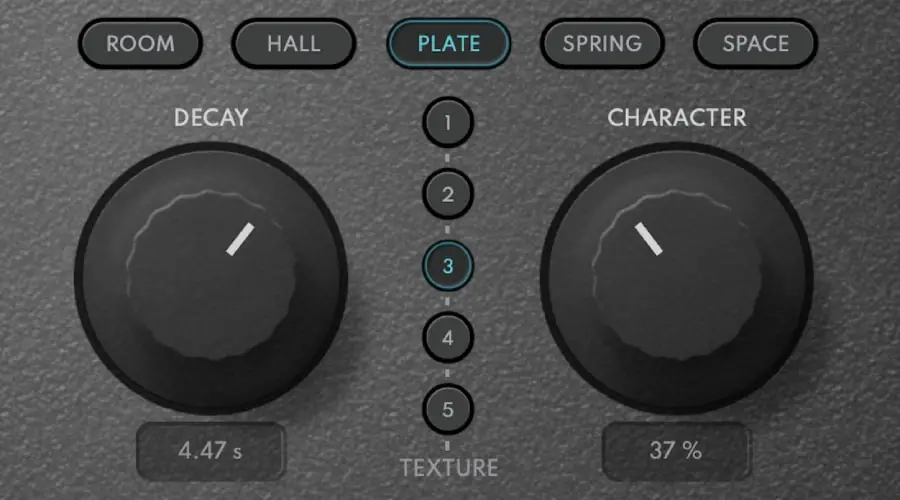
- Character and variety: 25 reverbs including springs and large SPACE types, each pushed from realistic to unreal with CHARACTER.
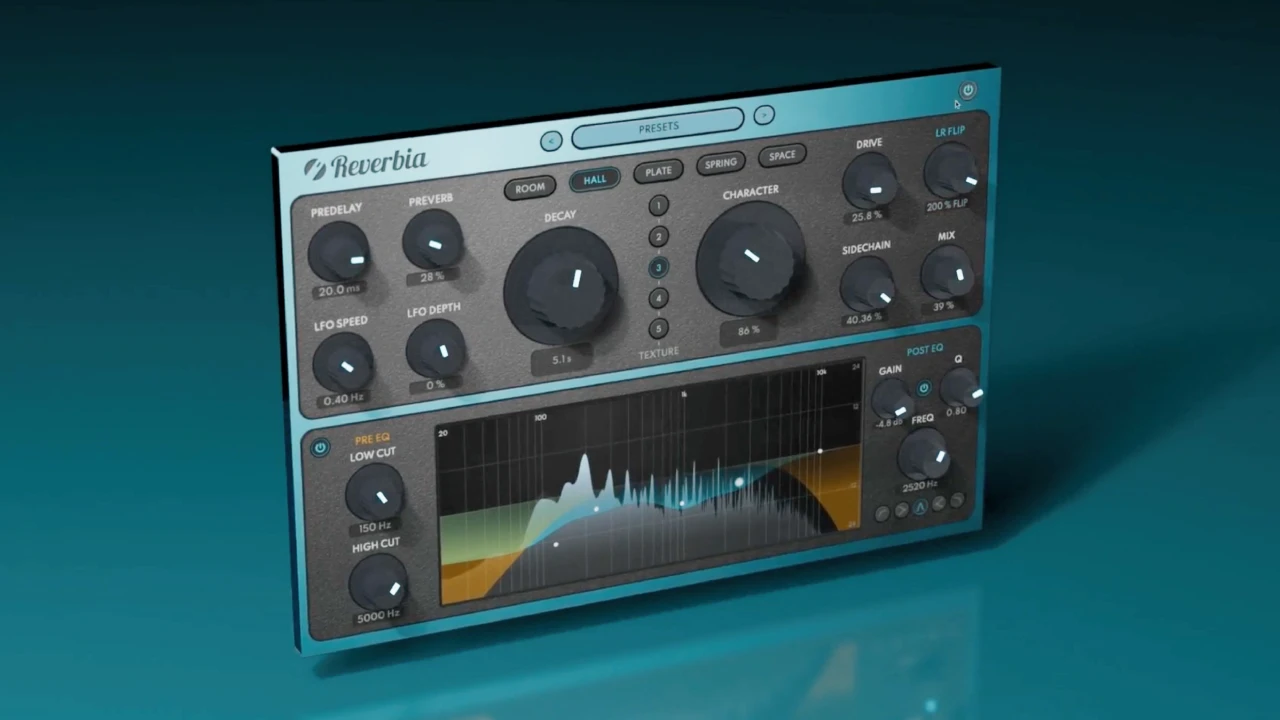
- Creative tools built in: DRIVE with several saturation types, hidden shimmer, LFO, tremolo, tempo-synced predelay and decay.
- EQ before the reverb: keep low end and sibilance out of the tail at the source, then shape the tail after.
- Price: clearly more affordable.
Reverbia
The all-in-one reverb: 25 reverbs, from realistic rooms to otherworldly spaces.
$79 $158 -50%
VST3 · AU · AAX · Windows & macOS
See ReverbiaWhich one for you?
| Profile | Our pick | Why |
|---|---|---|
| Music producer, beatmaker | Reverbia | Character, drive, shimmer and movement in one window |
| Mix engineer, stereo music | Both | Reverbia for color and speed, Pro-R 2 for surgical decay control |
| Film, TV, Dolby Atmos | Pro-R 2 | Immersive layouts and IR matching |
| Ambient, cinematic music | Reverbia | Unreal spaces, shimmer, LFO, tremolo |
| Guitar and vintage sounds | Reverbia | Dedicated SPRING types |
Whichever you try, compare on your own tracks at matched loudness with Diffonic.
2027 verdict
Pro-R 2 is the better tool for surgical decay control, immersive work and IR matching. For music production, Reverbia offers more character and creative range for less money: 25 reverbs from realistic to unreal, drive, shimmer, LFO, tremolo, EQ before and after, and ducking. See also Reverbia vs Valhalla VintageVerb and our best reverbs of 2027.
Frequently asked questions
Is Reverbia better than FabFilter Pro-R 2?
It depends on the job. Pro-R 2 is a superb precision reverb, with frequency-dependent decay, IR matching and immersive formats up to 9.1.6. Reverbia is more creative and affordable: 25 reverbs including springs and huge spaces, CHARACTER from realistic to unreal, drive, hidden shimmer, LFO and tremolo, with EQ before and after and ducking.
Which is better for Dolby Atmos and post-production?
FabFilter Pro-R 2, which supports channel layouts up to 9.1.6. Reverbia is designed for stereo music production.
Which is better for electronic and ambient music?
Reverbia, thanks to its unreal SPACE types, shimmer, LFO, tremolo and drive. Pro-R 2 is more focused on natural, transparent spaces and classic plates.