At a glance
- File analysis, normalization and delivery formats: Lufsonic
- The audio-post reference meter: NUGEN Audio VisLM
- Complete metering suite: iZotope Insight 2
- Affordable, with many presets: Youlean Loudness Meter Pro
- Simple and established: Waves WLM
Loudness compliance in 2027
Broadcasters and streaming services reject files that don't meet their loudness specifications. Each has its own rules: target level, tolerance, true-peak ceiling, sometimes dialogue-gated measurement. Getting it right the first time saves re-deliveries and protects the mix, since an automatic correction downstream can change the sound you approved.
The main delivery targets
| Standard | Region / use | Target | True peak |
|---|---|---|---|
| EBU R128 | Europe, broadcast | -23 LUFS | -1 dBTP |
| ATSC A/85 | United States (CALM Act) | -24 LKFS | -2 dBTP |
| Netflix | Streaming, dialogue-gated | -27 LKFS | -2 dBTP |
| ARIB TR-B32 | Japan | -24 LKFS | Per specification |
| OP-59 | Australia | -24 LKFS | Per specification |
Specifications change and clients sometimes add their own rules: always check the delivery documents for each project.
The best loudness tools for broadcast and streaming
1. Lufsonic: analysis, normalization and ready-made formats
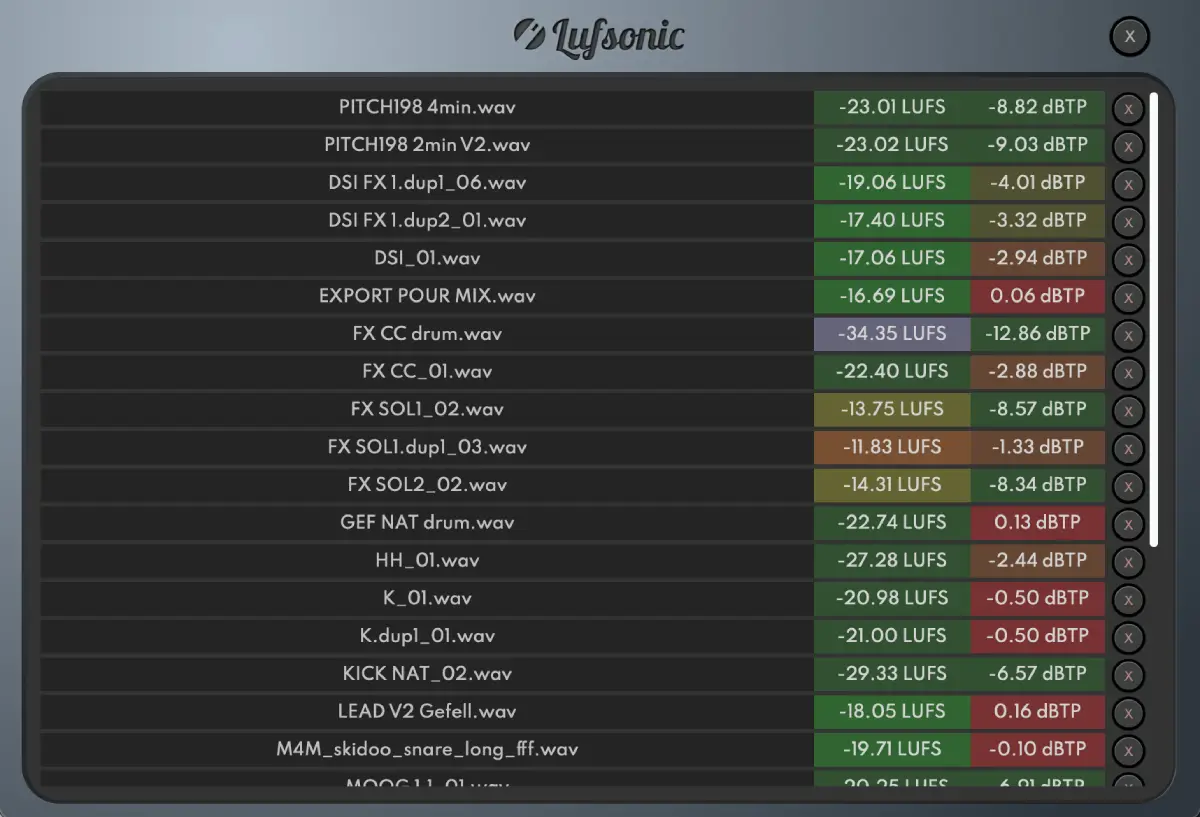
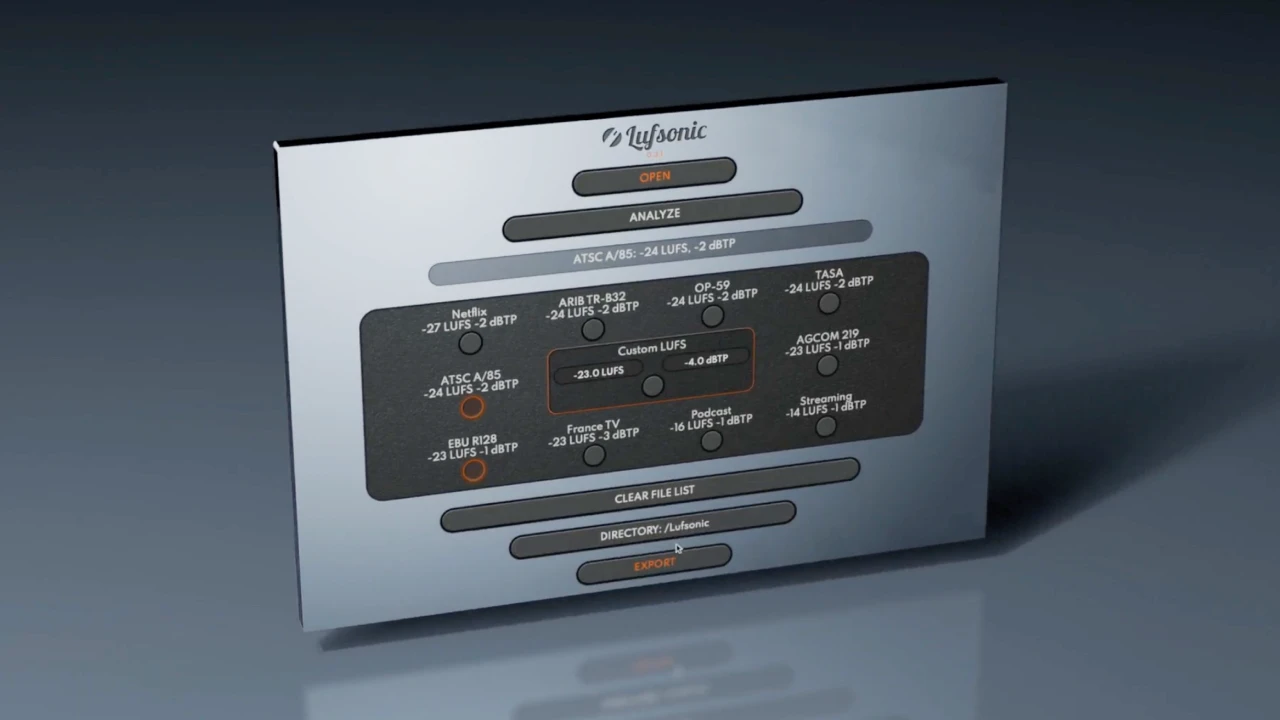
Lufsonic is built for the final step: drop your files, choose a delivery format, export. It measures to ITU-R BS.1770-4 and EBU R128 (integrated, short-term and momentary loudness, LRA and true peak) without real-time playback, and includes formats for Netflix, ARIB TR-B32, OP-59, TASA, ATSC, AGCOM, EBU R128, France TV, Podcast and Streaming, plus custom LUFS and dBTP targets. Batch processing handles a whole series of episodes, and exportable reports document each delivery.
Lufsonic
Analyze and normalize dozens of audio files in seconds.
$49 $98 -50%
Standalone app · Windows & macOS
See Lufsonic2. NUGEN Audio VisLM: the audio-post reference
An industry-standard meter for post-production, with loudness history locked to timecode, loudness-to-dialogue ratio, multi-stem monitoring, QC report export and immersive formats up to 9.1.6.
3. iZotope Insight 2: the complete metering suite
Loudness, spectrum, stereo and surround metering in one customizable window. Useful when you want all your measurements in one place while mixing.
4. Youlean Loudness Meter Pro: affordable and complete
Presets for ITU-R BS.1770-4, EBU R128, ATSC A/85, OP-59, ARIB TR-B32, AGCOM and more, file analysis by drag and drop, and PDF export in the Pro version. Excellent value.
5. Waves WLM Loudness Meter: simple and established
A long-standing loudness meter with broadcast presets, widely found in studios that already use Waves.
A reliable delivery workflow
- While mixing: keep a real-time meter on the master to stay close to the target.
- Before export: control true peaks with a true-peak limiter set below the required ceiling.
- After export: analyze every file in Lufsonic, normalize to the delivery format if needed, and export a report.
- Before sending: listen to the normalized version once, to be sure nothing changed in a way you didn't approve.
2027 verdict
For checking and normalizing final files quickly, with ready-made formats from Netflix to EBU R128, Lufsonic is our top pick. NUGEN VisLM remains the reference real-time meter for audio post, Insight 2 the most complete metering suite, and Youlean Pro the best value. See also our best loudness meters of 2027.
Frequently asked questions
What loudness does Netflix require?
Netflix asks for -27 LKFS (±2 LU) measured on dialogue, with a true peak of -2 dBTP maximum. Lufsonic includes a ready-made Netflix delivery format, and meters such as NUGEN VisLM support dialogue-gated measurement.
What is the difference between EBU R128 and ATSC A/85?
EBU R128 (Europe) targets -23 LUFS with a true peak of -1 dBTP. ATSC A/85 (United States, CALM Act) targets -24 LKFS with a true peak of -2 dBTP. Both measure loudness with the ITU-R BS.1770 algorithm.
Do I need a real-time meter or file analysis?
Both have their place: a real-time meter in the DAW helps while mixing, and file analysis checks the final deliverables quickly, often for a whole batch. Lufsonic analyzes and normalizes files without real-time playback.